This video is a really good overview of the majority of what we are going to learn, and how to apply our knowledge to predicting and explaining inheritance.
Sunday, 19 July 2020
Predicting Inheritance - Overview
Over the next couple of weeks, we will explore how to use our knowledge of DNA, alleles, genes, chromosomes, cell division and sexual reproduction to predict and explain the inheritance of characteristics/traits. Sounds like a lot!!
This video is a really good overview of the majority of what we are going to learn, and how to apply our knowledge to predicting and explaining inheritance.
This video is a really good overview of the majority of what we are going to learn, and how to apply our knowledge to predicting and explaining inheritance.

Monday, 29 June 2020
Cell Division
Cells divide for a few reasons:

- growth
- repair
- asexual reproduction
- gamete production (for sexual reproduction)
Organisms have two types of cell division to cater for these different reasons: Mitosis and Meiosis.

MITOSIS
This type of cell division creates two daughter cells that are identical clones of the parent cell (unless a mutation occurs). We do this for growth and repair. Some organisms use this to create clones (asexual reproduction).
MEIOSIS
Organisms that use sexual reproduction rely upon meiosis to make gametes (sex cells). Sex cells need to be haploid (half the number of chromosomes), so they make a cell with the right number of chromosomes during fertilisation. Variation during meiosis can be inherited, as these cells are the start of a new life.
COMPARE AND CONTRAST
Wednesday, 24 June 2020
DNA Replication and Gene Expression
Sections of DNA code for different genes. DNA is an ideal molecule to carry this inherited information, because it can be replicated.
We need to know what the base sequence of a new strand of DNA, if we know the base sequence of the original strand of DNA.
We also need to understand that this is where a lot of mistakes can happen. Just like copying a computer file, errors can occur when DNA is replicated. A change to the base sequence is called a mutation.
Some mutations are benign. This means there is no effect on the gene. The same amino acids are made, even with the error in the base sequence. This is like making a minor spelling mistake in a sentence.
Other mutations cause changes to the base sequence. These mutations can result in new alleles for the gene. They can also lead to complications such as cancer, where the change causes the cell to grow and reproduce uncontrollably.
To understand the effect of mutations, it is useful to know about how the DNA is "read" by the cell. This is called gene expression and results in protein synthesis.
For a complete overview of DNA structure and replication, check out this video:
And this one gives a complete overview of gene expression:
We need to know what the base sequence of a new strand of DNA, if we know the base sequence of the original strand of DNA.
We also need to understand that this is where a lot of mistakes can happen. Just like copying a computer file, errors can occur when DNA is replicated. A change to the base sequence is called a mutation.
Some mutations are benign. This means there is no effect on the gene. The same amino acids are made, even with the error in the base sequence. This is like making a minor spelling mistake in a sentence.
Other mutations cause changes to the base sequence. These mutations can result in new alleles for the gene. They can also lead to complications such as cancer, where the change causes the cell to grow and reproduce uncontrollably.
To understand the effect of mutations, it is useful to know about how the DNA is "read" by the cell. This is called gene expression and results in protein synthesis.
For a complete overview of DNA structure and replication, check out this video:
Tuesday, 16 June 2020
Cells, Chromosomes and the Genetic Code
As living things, we are made up of cells. Inside those cells is a nucleus. Inside the nucleus of each cells are structures called chromosomes. Chromosomes contain our genetic code. The genetic code is a sequence of bases on a molecule called deoxyribonucleic acid (DNA). Sections of this DNA code for specific traits. These sections are called genes. There are often different versions of the same gene, called alleles. You got one allele from each parent. Alleles differ in their exact base sequence (genetic code), which gives variation (differences).
He patai? Do you have questions? Check out the appropriate video for a more detailed explanation:
He patai? Do you have questions? Check out the appropriate video for a more detailed explanation:
What is DNA?
What are Chromosomes?
Friday, 1 May 2020
Viruses
Viruses are the last of our microbes...although they are not technically living things!!

STRUCTURE

VIRUSES AND DISEASE
VACCINATION
Our body usually does a good job at fighting viruses (and other pathogens). This is our Immune Response, and was covered in our work on Bacteria.
We have developed vaccines for some viruses. How does that work?
Tuesday, 28 April 2020
Fungi
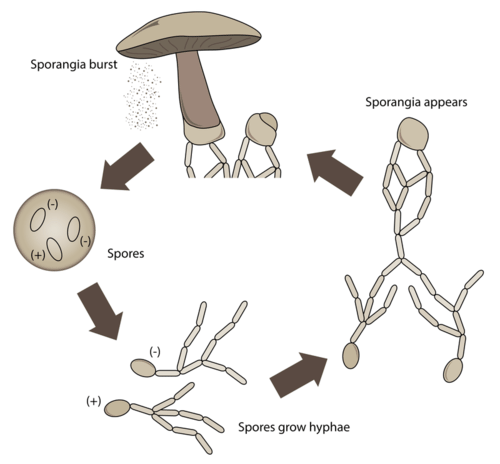
This post is an overview of fungi. The PowerPoint that forms the basis of our learning has excellent diagrams that should be copied into our books/notes. Add any details from these videos etc. that you find useful in building your understanding of fungi and how they interact with the world around them.
Fungi can be very useful to humans, as they can be a food source (mushrooms and truffles), used to make food/drink (blue cheeses, ginger beer, alcoholic drinks, bread...), and make antibiotic chemicals that we can use to treat bacterial diseases.
Unfortunately, fungi can also be problematic to humans. They can cause diseases, such as Athlete's Foot. They can spoil our food (bread mould, jam mould...). Because their cell structure is so similar to ours, fungal diseases are difficult to treat. Because we only usually notice fungi on our food when we see their sporangia, we do not know how far into our food they have spread.
By understanding the structure and life processes of fungi, we can learn how to use them to our advantage, and how to deal with them when they cause disease or spoil our food.


OVERVIEW/STRUCTURE
Some fungi are multicellular organisms while others (like yeast) are unicellular organisms. They have similarities with bacteria, as well as similarities with animals and plants. Therefore, they are their own kingdom.Fungi can be very useful to humans, as they can be a food source (mushrooms and truffles), used to make food/drink (blue cheeses, ginger beer, alcoholic drinks, bread...), and make antibiotic chemicals that we can use to treat bacterial diseases.
Unfortunately, fungi can also be problematic to humans. They can cause diseases, such as Athlete's Foot. They can spoil our food (bread mould, jam mould...). Because their cell structure is so similar to ours, fungal diseases are difficult to treat. Because we only usually notice fungi on our food when we see their sporangia, we do not know how far into our food they have spread.
By understanding the structure and life processes of fungi, we can learn how to use them to our advantage, and how to deal with them when they cause disease or spoil our food.

GROWTH AND REPRODUCTION (Budding and Spores)
SPORES
Multicellular fungi reproduce by creating spores. These can be carried away by vectors (the wind, water, animals...) to a new food source where they create a new fungus.
BUDDING
In contrast, unicellular fungi (yeast) reproduce by doing a process called budding. It is very similar to binary fission in bacteria.
NUTRITION (Extracellular Digestion)
Like bacteria, fungi release enzymes to break food down outside their cells. They then absorb the digested food into their cells to be used as Nutrition.
FUNGAL DISEASES
Fungal diseases are some of the most difficult to treat. Genetically, fungi are closer to animals (like us) than bacteria or plants. That means most things that kill fungi also harm us (or plants that we want to protect from the fungus). Not ideal!!!
Just watch the first 1:45 of this. The rest is about another type of pathogenic Kingdom, called the Protists:
USES OF FUNGI
1. Food Industry
This is not the most engaging video, but it does give a very good overview of some of the key uses of fungi in the food industry.
2. Antibiotics
Antibiotics were actually discovered by accident. A fungus contaminated an experiment involving bacteria. Now, fungi are one of the main sources of our common antibiotics used to fight bacterial diseases.
3. The Future
SYMBIOSIS AND OTHER SUPERPOWERS
Fungi are amazing in the relationships they have with other organisms, especially plants. These videos are really only for those interested in learning more about the wonderful world of fungi:
Sunday, 19 April 2020
Bacteria
This post is an overview of bacteria. The PowerPoint that forms the basis of our learning has excellent diagrams that should be copied into our books/notes. Add any details from these videos etc. that you find useful in building your understanding of bacteria and how they interact with the world around them.


OVERVIEW/STRUCTURE


GROWTH AND REPRODUCTION (Binary Fission)
Growth = getting bigger
Reproduction = making "daughter" cells
Why don't bacteria keep dividing and take over every surface of the world? There are factors that affect bacterial growth and reproduction. This next video gives a very in-depth overview of this:
NUTRITION (Extracellular Digestion)
Bacteria cannot "eat" food the way we do. When they detect suitable nutrition, they release enzymes (biological catalysts) which break the food down into much smaller particles. These smaller particles can be absorbed across the cell wall and cell membrane. Once inside the cell, these nutritious particles can then be used in the biochemical processes in the cytoplasm (and organelles such as mitochondria).
BACTERIA AND FOOD
1. Food Safety
Bacteria can make food spoil. This is because they release enzymes that speed up the break-down (digestion) of food, as part of their own life processes to gain Nutrition.
Bacteria can also cause food poisoning, making us unwell. Many bacteria also release toxins as part of their waste. Toxins can make us sick. However, the bacteria are not usually making these toxins with the intention of making their host (us) sick. They are just part of their Excretion life process.
We often have an immune response to bacteria inside our body. As bacteria Grow and Reproduce, our immune system tries to kill them. This may cause a fever, for example.
Consider each "Key to Food Safety" from the video. How would each help reduce the risk of food poisoning?
2. Digestion
Bacteria also help our digestion. This is very important for our health.
Think about how the life processes (MRS GREN) are helping humans with their own digestion. Bacteria are not helping us "on purpose" - it is just an added bonus for us, and is probably why our immune system does not kill them off!
3. Food Production
Bacteria are very useful in food production, particularly for the dairy industry.
The first part of this is about a simple fungus, called yeast. The rest of the video is about the role of bacteria in cheese production. Again, try to link the life processes of bacteria to how they are being used to help us (humans).
BACTERIA AND DISEASE
Bacteria cause a lot of diseases in humans, other animals, and in plants. This is because of the toxins they produce (as part of excretion) or because they reproduce so quickly that they harm (or kill) their host.
How does the human body fight these pathogens?
What about drugs to help us?
Subscribe to:
Comments (Atom)
Newton's Second Law of Motion
NEWTON'S SECOND LAW OF MOTION - F=m.a When forces are unbalanced , an object will change direction or speed (accelerate). This is propor...

-
Sections of DNA code for different genes. DNA is an ideal molecule to carry this inherited information, because it can be replicated . ...
-
This post is an overview of bacteria. The PowerPoint that forms the basis of our learning has excellent diagrams that should be copied into ...
-
As living things, we are made up of cells . Inside those cells is a nucleus . Inside the nucleus of each cells are structures called chromos...


